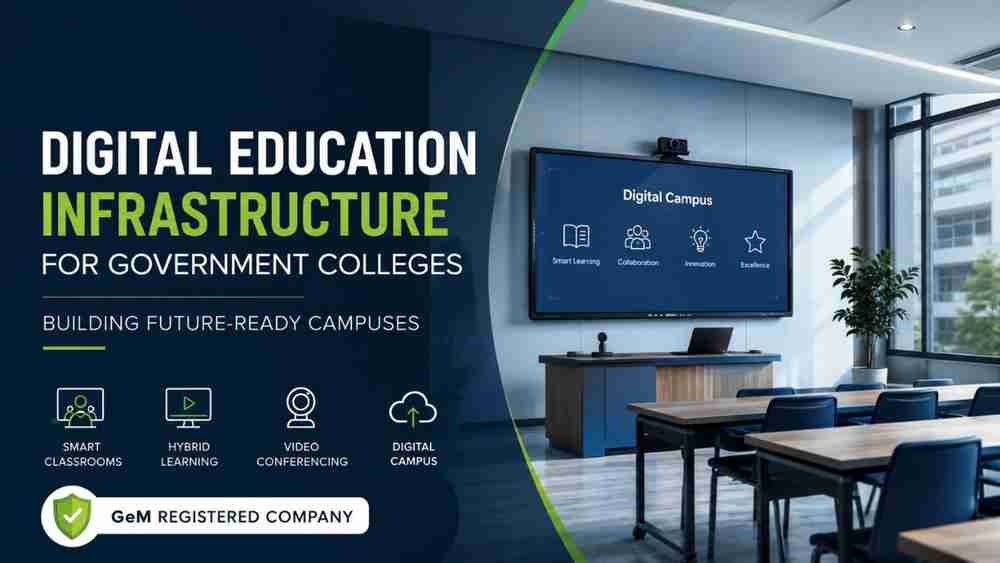
The demand for Digital Education Infrastructure for Government Colleges has increased significantly as higher education institutions across India embrace technology-driven learning. With the implementation of NEP 2020, the expansion of the Digital India Mission, evolving NAAC accreditation standards, and growing emphasis on NIRF rankings, government colleges are investing in smart classrooms, hybrid learning environments, and campus-wide digital transformation.
Today, higher education is no longer limited to traditional classrooms. Students expect interactive learning, online collaboration, virtual laboratories, digital libraries, and access to modern educational technologies. To meet these expectations, institutions require an integrated digital ecosystem that enhances teaching, research, administration, and student engagement.
This guide explains everything government colleges need to know about building future-ready digital campuses and how Edumark Technologies, a GeM (Government e-Marketplace) Registered Company, supports educational institutions with end-to-end implementation and long-term technical support.
What is Digital Education Infrastructure?
Digital Education Infrastructure refers to the complete ecosystem of hardware, software, networking, and educational technologies that enable efficient teaching, learning, communication, and campus management.
A modern digital campus typically includes:
Smart Classrooms
Technology-enabled classrooms equipped with interactive displays, audio systems, cameras, and digital teaching tools that improve classroom engagement.
Interactive Flat Panels
Large 4K touchscreen displays allowing faculty members to write, annotate, present multimedia content, and conduct interactive lessons.
Digital Podiums
Integrated teaching stations featuring microphones, computers, document cameras, and touch controls for seamless classroom presentations.
Lecture Capture Systems
Automated recording systems that allow lectures to be archived and shared with students for revision and remote learning.
PTZ Cameras
Professional Pan-Tilt-Zoom cameras used for lecture recording, hybrid teaching, webinars, and live streaming.
Video Conferencing Rooms
Dedicated spaces equipped for online meetings, academic collaborations, virtual conferences, and guest lectures.
Learning Management Systems (LMS)
Platforms that manage course content, assignments, attendance, assessments, and student communication.
Digital Libraries
Online repositories providing access to journals, e-books, research databases, and academic resources.
Computer Labs
Modern computer laboratories supporting technical education, programming, simulations, and digital skill development.
Campus Wi-Fi
Secure high-speed wireless connectivity across classrooms, laboratories, hostels, and administrative buildings.
Audio-Visual Systems
Professional microphones, speakers, projectors, and display systems that enhance teaching and events.
Cloud Collaboration Tools
Platforms enabling faculty and students to collaborate remotely on projects, assignments, and research.
Online Examination Systems
Secure digital assessment platforms supporting quizzes, exams, and automated evaluation.
Together, these technologies improve learning outcomes, institutional efficiency, and academic collaboration.
Why Government Colleges Need Digital Infrastructure in 2026
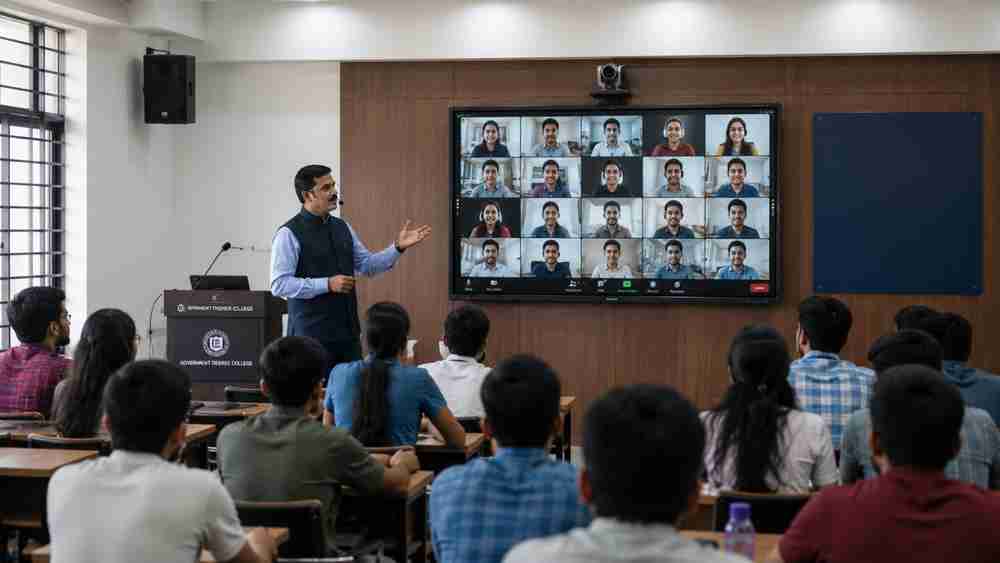
Government colleges are rapidly transitioning toward hybrid and technology-enabled education. Digital infrastructure has become essential for delivering quality education while meeting modern academic expectations.
Key reasons include:
- Support for hybrid and blended learning models
- Digital attendance and academic management
- Online guest lectures from industry experts
- Improved employability and skill development
- Better collaboration with industries and universities
- Virtual laboratories and remote practical sessions
- Enhanced research collaboration
- Increased student participation
- Improved academic performance through interactive learning
- Efficient administrative operations
Digital transformation also enables institutions to remain competitive while improving accessibility for students from diverse backgrounds.
Key Components of a Modern Digital Campus
Infrastructure | Purpose | Benefits |
Interactive Flat Panels | Interactive teaching | Better classroom engagement |
PTZ Cameras | Lecture recording & hybrid learning | Remote education support |
Wireless Presentation Systems | Cable-free content sharing | Faster collaboration |
Digital Podiums | Integrated classroom control | Professional teaching environment |
Smart Lecture Recording | Record and archive lectures | Anytime learning |
Video Conferencing Systems | Virtual meetings & classes | National and international collaboration |
AI Cameras | Auto-tracking instructors | Better lecture recordings |
Audio Systems | Clear classroom communication | Enhanced learning experience |
LED Display Solutions | Campus announcements | Effective communication |
Computer Labs | Practical training | Digital skill development |
Campus Networking | High-speed connectivity | Reliable digital learning |
UPS & Power Backup | Uninterrupted operations | System reliability |
Government Initiatives Supporting Digital Colleges
Several national initiatives encourage colleges to invest in digital education infrastructure.
National Education Policy (NEP) 2020
Promotes technology-enabled education, blended learning, digital resources, and innovative teaching methodologies.
Digital India Mission
Supports digital infrastructure development across educational institutions.
PM eVIDYA
Provides digital educational content accessible through multiple platforms.
SWAYAM
Offers online courses from leading educational institutions to improve learning opportunities.
National Digital Library
Provides students and faculty access to millions of academic resources.
UGC Digital Learning Initiatives
Encourage adoption of online teaching tools and digital learning platforms.
AICTE Digital Education
Supports engineering and technical institutions in implementing modern educational technologies.
NAAC Accreditation
Digital infrastructure contributes to institutional quality indicators related to teaching-learning processes, ICT facilities, and governance.
NIRF Rankings
Technology-enabled campuses positively influence teaching quality, research, outreach, and perception.
These initiatives collectively encourage higher education institutions to adopt future-ready technologies.
How Edumark Technologies Helps Government Colleges
Edumark Technologies provides comprehensive Digital Education Infrastructure for Government Colleges through planning, procurement, installation, and technical support.
As a GeM Registered Company, Edumark Technologies simplifies procurement for government institutions while ensuring compliance with government purchasing processes.
Its solutions include:
- Smart Classroom Design & Installation
- Interactive Flat Panel Solutions
- Hybrid Classroom Setup
- Digital Lecture Capture Systems
- PTZ Camera Installation
- Video Conferencing Rooms
- Smart Seminar Hall Solutions
- Auditorium AV Systems
- Digital Language Labs
- Computer Lab Setup
- Campus Networking
- Audio & Sound Systems
- Faculty Training Programs
- Annual Maintenance Contracts (AMC)
- Technical Support
- Pan-India Installation Services
- Customized Solutions for Government Colleges and Universities
By understanding the unique academic and administrative requirements of higher education institutions, Edumark Technologies helps colleges build scalable, future-ready digital campuses.
Why Purchase Through GeM?
Government colleges increasingly procure educational technology through the Government e-Marketplace (GeM) because it offers a transparent and efficient procurement process.
Benefits include:
- Transparent procurement procedures
- Verified suppliers
- Competitive pricing
- Government compliance
- Faster purchasing process
- Easy documentation
- Secure transactions
- Trusted vendor ecosystem
Since Edumark Technologies is a GeM Registered Company, government colleges can procure digital education solutions with greater confidence and administrative convenience.
Benefits of Digital Education Infrastructure
Modern digital campuses provide several long-term advantages:
- Improved teaching quality
- Higher student engagement
- Enhanced faculty collaboration
- Hybrid learning readiness
- Reduced operational costs
- Efficient academic administration
- Increased digital literacy
- Better NAAC preparedness
- Stronger NIRF performance
- Sustainable and paperless campus operations
- Better research collaboration
- Future-ready education ecosystem
Why Choose Edumark Technologies?
Government colleges require experienced implementation partners capable of delivering reliable digital infrastructure solutions.
Edumark Technologies offers:
- GeM Registered Company
- End-to-End Digital Infrastructure Solutions
- Expert Consultation
- Customized College Solutions
- Certified Installation Team
- Premium Technology Partners
- Pan-India Support
- Faculty Training & Implementation
- Reliable After-Sales Service
- Annual Maintenance Support
The company focuses on designing solutions that align with institutional objectives, budget considerations, and future expansion plans.
Frequently Asked Questions (FAQs)
1. What is digital education infrastructure for government colleges?
Digital education infrastructure includes smart classrooms, interactive displays, networking, LMS platforms, video conferencing systems, digital libraries, computer labs, and other technologies that support modern teaching and learning.
2. Why do government colleges need smart classrooms?
Smart classrooms improve student engagement, support hybrid learning, enhance collaboration, and make teaching more interactive and effective.
3. What equipment is required for a digital college campus?
Typical infrastructure includes Interactive Flat Panels, PTZ Cameras, Digital Podiums, AV systems, campus networking, LMS platforms, computer labs, digital libraries, and video conferencing solutions.
4. How does digital infrastructure support NEP 2020?
It enables blended learning, technology integration, digital content delivery, online assessments, and improved accessibility—key objectives of NEP 2020.
5. Can government colleges purchase digital infrastructure through GeM?
Yes. Government colleges can procure eligible digital education solutions through the Government e-Marketplace (GeM), following applicable procurement policies.
6. Is Edumark Technologies a GeM Registered Company?
Yes. Edumark Technologies is a GeM Registered Company, helping government institutions procure digital education solutions through the GeM platform.
7. What are the benefits of hybrid classrooms in higher education?
Hybrid classrooms enable simultaneous online and offline teaching, support remote participation, improve accessibility, and facilitate guest lectures from experts worldwide.
8. How much does digital education infrastructure cost for a government college?
The cost depends on factors such as campus size, number of classrooms, AV requirements, networking infrastructure, software, and implementation scope. Institutions should seek a customized assessment and quotation based on their specific needs.
Conclusion
Investing in Digital Education Infrastructure for Government Colleges is a strategic step toward delivering high-quality, technology-enabled higher education in India. Smart classrooms, hybrid learning environments, digital collaboration tools, and integrated campus technologies not only enhance teaching and student engagement but also help institutions align with NEP 2020, strengthen NAAC accreditation, and improve NIRF readiness.
For colleges planning new digital initiatives or upgrading existing infrastructure, partnering with an experienced implementation provider can simplify every stage—from planning and GeM-based procurement to installation, faculty training, and ongoing maintenance. As a GeM Registered Company, Edumark Technologies offers end-to-end digital education infrastructure solutions tailored to the needs of government colleges, universities, engineering institutes, and polytechnic campuses across India.
Call to Action:
If your institution is planning a smart classroom, hybrid learning environment, lecture capture system, auditorium AV upgrade, or complete digital campus transformation, contact Edumark Technologies for consultation, solution design, GeM procurement assistance, professional installation, faculty training, and long-term technical support.