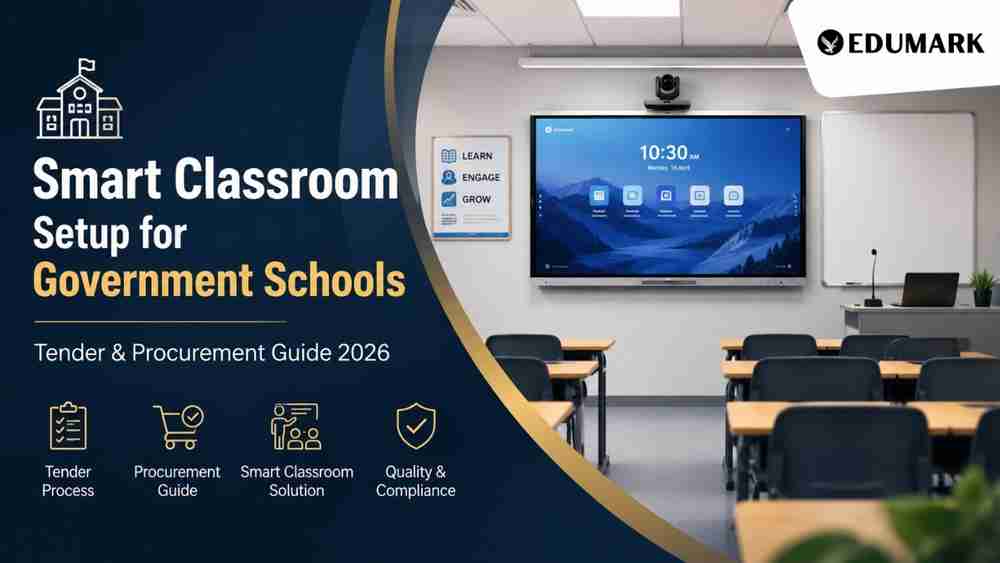
Government schools across India are rapidly adopting digital education to improve classroom engagement, teaching quality, and student outcomes. As education departments, district administrations, and government institutions invest in modern learning infrastructure, selecting the right smart classroom solution has become more important than ever.
At Edumark Technologies, we work closely with schools, educational institutions, government bodies, and project stakeholders to design, install, and support complete smart classroom ecosystems. From consultation and technical planning to installation, training, and after-sales support, our team ensures every project is executed professionally and in compliance with procurement requirements.
This guide explains the complete tender and procurement process for smart classroom setup in government schools, helping decision-makers understand every stage of implementation.
Quick Answer
A successful government smart classroom project requires proper planning, a transparent procurement process, quality technical specifications, experienced installation partners, teacher training, and long-term maintenance support. We recommend focusing on performance, service capability, and lifecycle value rather than selecting vendors solely on the lowest price.
Why Government Schools Need Smart Classrooms
Modern classrooms are no longer limited to blackboards and chalk. Today's students learn better through interactive, visual, and technology-enabled teaching methods.
A smart classroom helps government schools:
- Improve student engagement
- Support digital learning initiatives
- Deliver multimedia lessons
- Enable hybrid and online teaching
- Increase teacher productivity
- Align with NEP 2020 objectives
- Enhance STEM education
- Create future-ready learning environments
Our experience shows that schools investing in reliable digital infrastructure achieve better classroom participation and improved teaching efficiency.
What Does a Government Smart Classroom Include?
A complete smart classroom setup should be designed as an integrated solution rather than a collection of individual devices.
Typical components include:
Interactive Smart Board
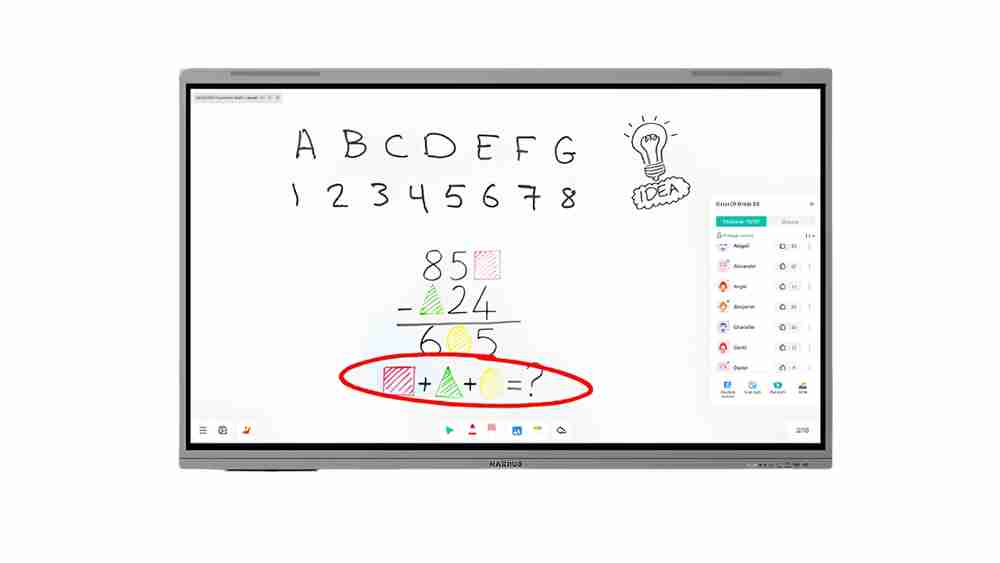
The interactive display acts as the classroom's central teaching platform.
Key features:
- 4K UHD Display
- Multi-touch functionality
- Android and Windows compatibility
- Wireless screen sharing
- Digital whiteboard
- Annotation tools
- Classroom recording support
Classroom Computer System

We recommend a high-performance PC or Mini PC capable of handling educational software, presentations, and video conferencing.
4K PTZ Camera
A PTZ camera enables:
- Hybrid teaching
- Classroom recording
- Online classes
- Teacher training sessions
- Virtual learning
Professional Audio System
Clear audio is essential for both classroom teaching and online sessions.
Recommended components include:
- Wireless microphone
- Ceiling or wall speakers
- Audio mixer (where required)
- Noise reduction technology
Lighting Setup
Proper lighting improves classroom visibility and enhances video quality for hybrid learning.
UPS & Power Backup
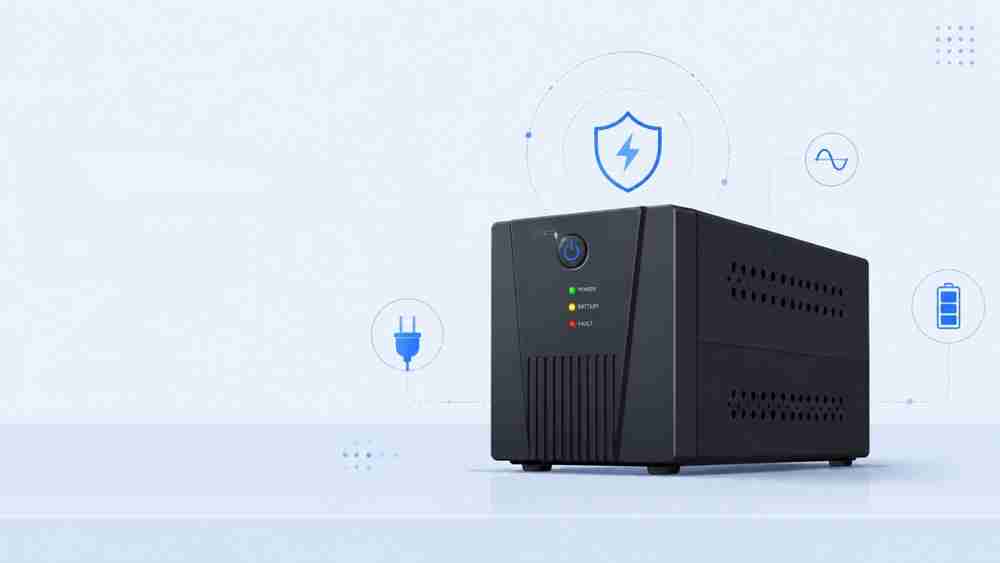
Reliable power backup ensures uninterrupted classroom operations during power fluctuations.
School ERP Integration
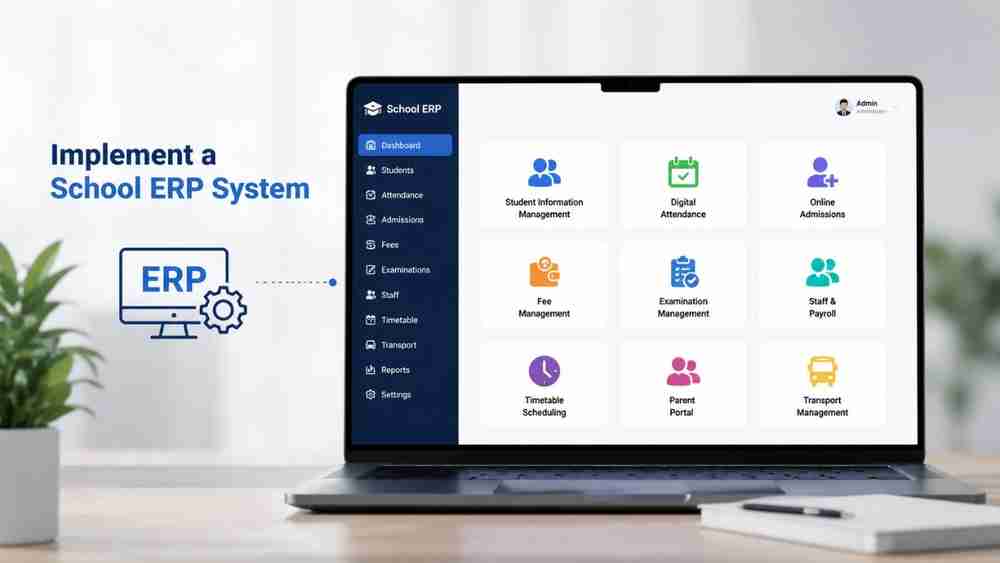
A smart classroom can also integrate with:
- Attendance management
- Student information system
- Examination management
- Fee management
- Parent communication
- Learning management systems
Understanding the Government Procurement Process
Government procurement typically follows a structured and transparent process.
Step 1: Requirement Assessment
We begin by understanding:
- Number of classrooms
- Student capacity
- Infrastructure availability
- Budget
- Educational objectives
- Connectivity requirements
Step 2: Technical Specification Preparation
Accurate technical specifications are essential for a successful tender.
Typical specifications include:
- Display size
- Processor
- RAM
- Storage
- Brightness
- Touch technology
- Camera resolution
- Audio requirements
- Warranty
- Installation scope
- Training requirements
Well-defined specifications reduce ambiguity and help ensure fair vendor evaluation.
Step 3: Budget Estimation
Budget planning should include:
- Equipment
- Installation
- Transportation
- Electrical work
- Networking
- Teacher training
- Warranty
- Annual Maintenance Contract (AMC)
Considering the total cost of ownership helps avoid unexpected expenses later.
Step 4: Tender Publication
The tender document should clearly define:
- Eligibility criteria
- Technical specifications
- Scope of work
- Delivery timeline
- Installation requirements
- Warranty conditions
- Service response time
- Evaluation criteria
Step 5: Technical Evaluation
During evaluation, we recommend assessing vendors on:
- Technical compliance
- Relevant project experience
- Installation capability
- Service infrastructure
- Financial stability
- Product quality
- Certifications
- Support network
Step 6: Financial Evaluation
Price should be evaluated alongside quality, service, warranty, and long-term support to ensure the best overall value.
Step 7: Installation & Commissioning
A professional installation includes:
- Site inspection
- Equipment installation
- Cable management
- System configuration
- Network integration
- Functional testing
- User acceptance testing
Step 8: Teacher Training
Technology adoption is successful only when educators are comfortable using it.
Our training programs cover:
- Smart board operation
- Digital teaching tools
- Classroom software
- Screen sharing
- Recording lessons
- Troubleshooting basics
Essential Technical Specifications for a Smart Classroom Tender
Component | Recommended Specification |
Interactive Display | 65–86 inch 4K UHD |
Touch Points | Minimum 20-point touch |
Operating System | Android + Windows compatible |
PTZ Camera | 4K Resolution |
Microphone | Wireless digital microphone |
Speakers | High-quality classroom audio |
Computer | Intel Core i5 or above |
Internet | High-speed broadband |
Warranty | Minimum 3 years |
Support | On-site service & training |
Common Mistakes to Avoid During Procurement
Based on our field experience, these are some of the most common issues:
- Selecting vendors only on the lowest price
- Incomplete technical specifications
- Ignoring after-sales support
- No teacher training plan
- Choosing incompatible devices
- Lack of future scalability
- No AMC provision
- Poor installation quality
- Weak networking infrastructure
Avoiding these mistakes leads to smoother implementation and better long-term results.
Why Schools Choose Us
We believe a smart classroom is a long-term investment, not just a hardware purchase.
Our team supports projects from planning to post-installation with:
- Consultation and project planning
- Tender support
- Product selection
- Professional installation
- Smart board configuration
- PTZ camera integration
- Audio and lighting setup
- Teacher training
- Warranty assistance
- Annual Maintenance Contracts (AMC)
- Pan India implementation
We also provide complementary technology solutions such as Hybrid Classroom Setup, School ERP Software, College ERP Software, Mobile App Development, Website Development, and complete IT infrastructure support.
Key Takeaways
- Plan the project before publishing the tender.
- Define clear technical specifications.
- Evaluate vendors on quality and service, not just price.
- Include installation, training, and maintenance in the scope.
- Prioritize lifecycle value over initial cost.
- Ensure reliable after-sales support for uninterrupted classroom operations.
Frequently Asked Questions
1. What is included in a government smart classroom setup?
A standard setup typically includes an interactive smart board, computer system, 4K PTZ camera, microphone, speakers, lighting, networking, installation, and teacher training.
2. How should a government school evaluate smart classroom vendors?
Vendors should be assessed on technical compliance, relevant experience, installation capability, warranty, service network, certifications, and overall value rather than only on price.
3. Is teacher training necessary after installation?
Yes. Proper training ensures teachers can confidently use the technology and maximize the benefits of the smart classroom.
4. Why is AMC important for smart classroom projects?
An Annual Maintenance Contract helps maintain system performance, reduces downtime, and extends the lifespan of classroom technology.
5. Can smart classrooms support hybrid learning?
Yes. With a 4K PTZ camera, professional audio system, and reliable internet connectivity, smart classrooms can seamlessly support both in-person and remote teaching.
Conclusion
A well-planned smart classroom project is more than a technology upgrade—it is an investment in the future of teaching and learning. By following a structured tender and procurement process, government schools can ensure transparency, quality, and long-term value from their digital infrastructure investments.
At Edumark Technologies, we combine technical expertise with hands-on implementation experience to deliver complete smart classroom solutions tailored to the unique needs of educational institutions. From consultation and procurement support to installation, teacher training, and after-sales service, we are committed to helping schools create engaging, future-ready learning environments across India.
Contact Edumark Technologies
Ready to modernize your government school with a professionally planned smart classroom?
Our team is here to assist you with:
- Smart Classroom Setup
- Hybrid Classroom Setup
- Interactive Smart Boards
- 4K PTZ Camera Installation
- Lighting & Audio Solutions
- School ERP Software
- College ERP Software
- Mobile App Development
- Website Development
- Consultation, Installation, Training & After-Sales Support
Contact Us Today
Edumark Technologies
Phone: +91 8002805461
Email: info@edumarktechnologies.com
Website: www.edumarktechnologies.com
Service Coverage: Pan India
Book a consultation or request a live product demonstration to explore the right smart classroom solution for your institution.