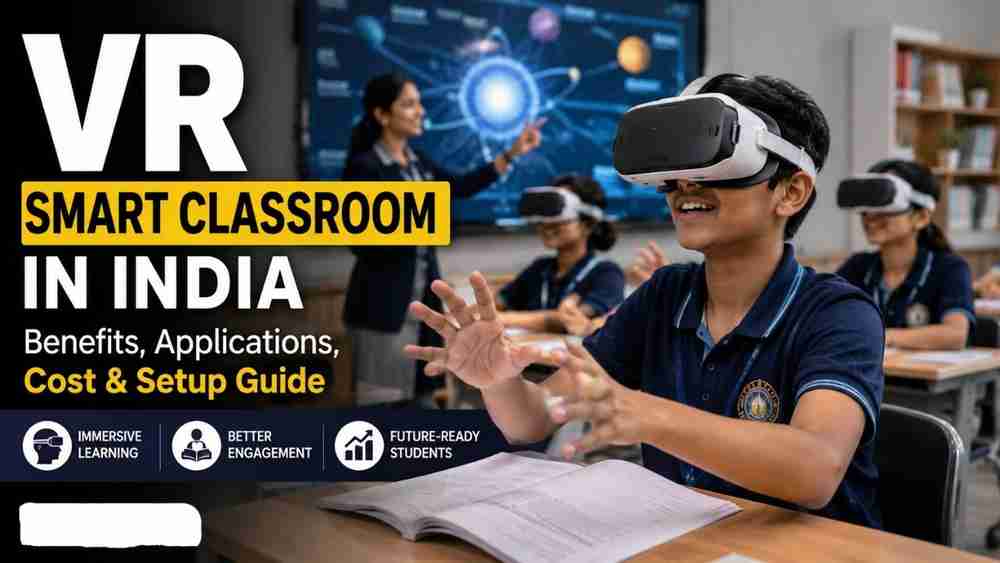
Education is rapidly moving beyond traditional textbooks and conventional digital classrooms. Interactive Flat Panels, digital content, smart audio systems, and other technologies have already changed the way teachers deliver lessons. The next step is Virtual Reality (VR), which can make learning more immersive and experiential.
A VR smart classroom in India combines VR technology with existing smart classroom infrastructure to help students explore educational concepts through interactive 3D environments.
What Is a VR Smart Classroom?
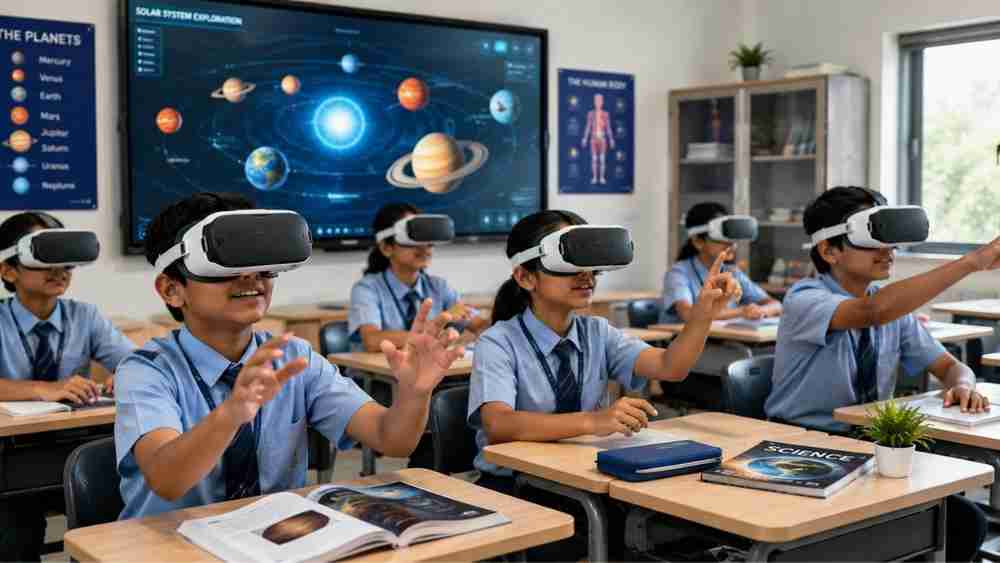
A VR smart classroom uses VR headsets and educational content to create simulated environments where students can explore subjects in a more interactive way.
For example, instead of only viewing a picture of the solar system, students can use VR to explore planets and space environments. Similarly, biology students can examine 3D models of the human body, while geography students can explore different environments and landforms.
VR does not replace teachers or Interactive Flat Panels. Instead, it works as an additional tool that supports immersive and experiential learning.
Benefits of VR in Education
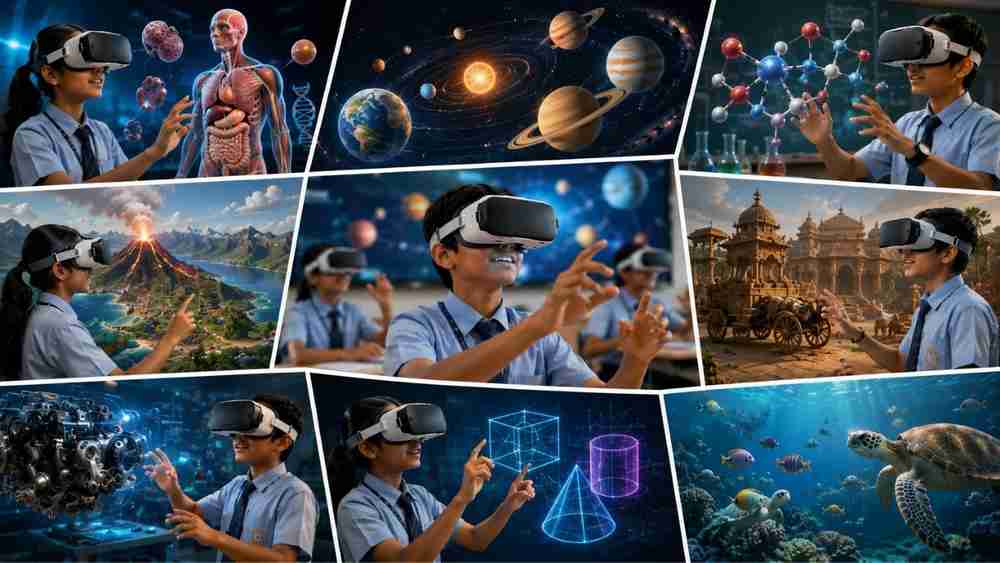
Virtual Reality can offer several benefits when it is used with appropriate educational content and teaching methods.
1. Interactive Learning
VR can make lessons more engaging by allowing students to explore virtual environments instead of only watching or reading about a topic.
2. Better Visualization
Complex concepts in subjects such as Biology, Physics, Chemistry, Geography, and Astronomy can be represented through 3D simulations.
3. Experiential Learning
Students can learn through exploration and simulated experiences, helping teachers introduce practical examples inside the classroom.
4. Virtual Field Trips
Students can explore historical places, geographical locations, museums, underwater environments, and other locations without physically travelling.
5. Safe Simulations
Certain laboratory and technical activities can be explored through virtual simulations where physical equipment or environments may not be readily available.
6. Future-Ready Skills
Exposure to emerging technologies can help students become familiar with modern digital learning environments.
Applications of VR in Schools
VR can be used across a wide range of subjects:
Subject | VR Learning Example |
Biology | Human anatomy, organs and cells |
Physics | Motion, gravity and electromagnetic concepts |
Chemistry | Molecules and laboratory simulations |
Geography | Volcanoes, oceans and geographical environments |
History | Historical locations and monuments |
Astronomy | Planets, space and celestial objects |
Mathematics | 3D shapes and spatial geometry |
Technical Education | Machines, robotics and industrial systems |
Popular VR Solutions for Education
Schools can explore different VR ecosystems depending on their requirements, content, budget, and infrastructure.
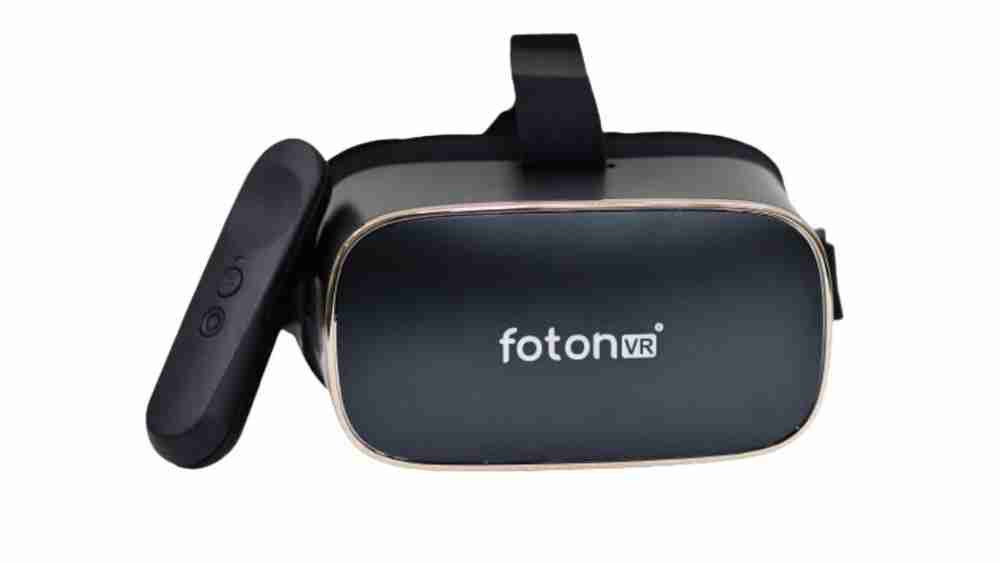
Foton VR can be considered for education-focused immersive learning experiences.
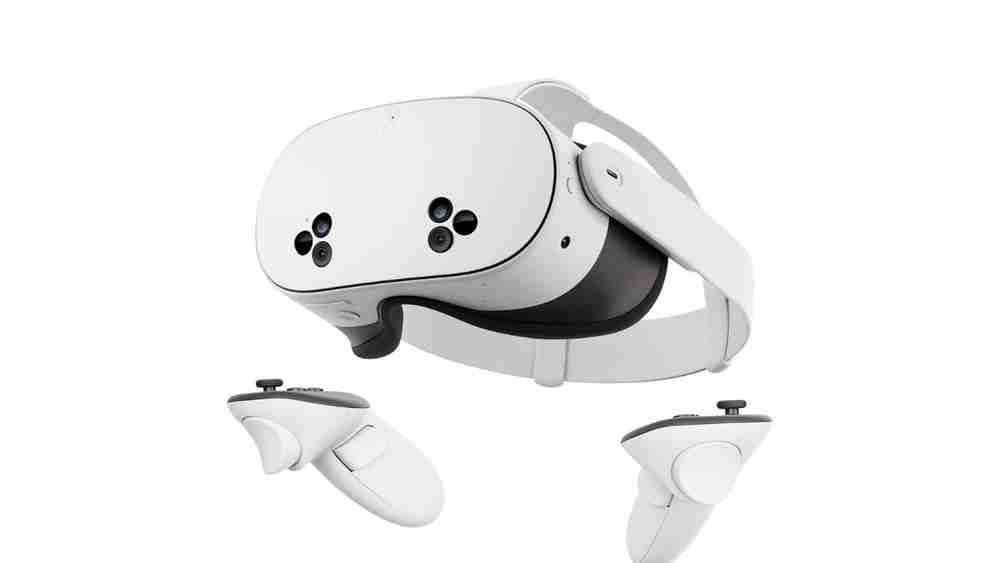
Meta VR, including the Meta Quest ecosystem, provides access to a wide range of immersive applications that schools can evaluate for educational use.
ClassVR is an education-focused VR/AR platform designed for classroom environments, with educational content and teacher-oriented management features.
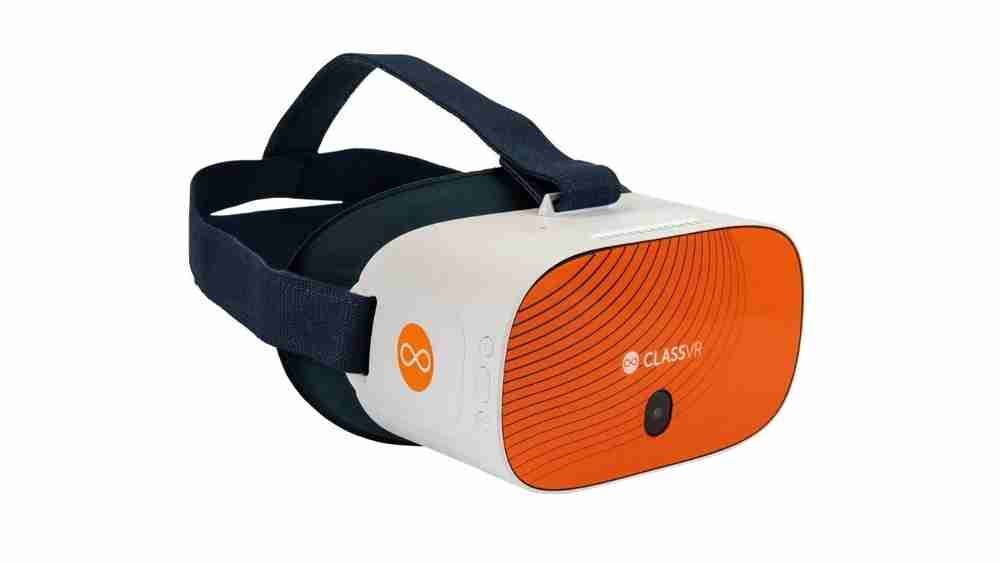
Before selecting a solution, schools should consider curriculum compatibility, content quality, ease of use, teacher controls, safety, training, and technical support.
VR + Interactive Flat Panel: A Powerful Combination
VR works particularly well when integrated with an existing smart classroom.
A teacher can first introduce a topic using an Interactive Flat Panel, explain the key concepts, and then allow students to explore a related VR experience. After the VR activity, the teacher can return to the digital board for discussion, questions, and assessment.
This creates a simple learning cycle:
Explain → Explore → Discuss → Reinforce
What Is Required for a VR Smart Classroom?
A basic VR setup may include:
- VR headsets
- Educational VR content
- Interactive Flat Panel
- Reliable Wi-Fi/network infrastructure
- Charging and storage facilities
- Classroom audio system
- Teacher training and technical support
The exact setup depends on the number of students, available space, subjects, and school requirements.
VR Classroom Setup Cost in India
The VR classroom setup cost in India varies from one school to another. It depends on the number and type of VR headsets, educational content, licensing, Interactive Flat Panel, networking, charging infrastructure, installation, training, and support.
Schools can also begin with a smaller pilot setup and expand the VR infrastructure gradually.
VR Smart Classroom Solutions by Edumark Technologies
Edumark Technologies Pvt. Ltd. provides smart classroom and education technology solutions for schools and educational institutions across India.
Our solutions can include:
- VR Smart Classroom & VR Lab Planning
- Interactive Flat Panels
- Smart Classroom Integration
- Classroom Audio Solutions
- PTZ Cameras
- Digital Teaching Solutions
- Installation, Training & Technical Support
We help institutions plan technology solutions according to their classroom requirements, infrastructure, and budget.
Conclusion
Virtual Reality in education can transform the way students experience complex concepts by bringing immersive and interactive learning into the classroom. When combined with Interactive Flat Panels and other smart classroom technologies, VR can create a more engaging and future-ready learning environment.
If your school is planning to introduce VR technology or upgrade its smart classroom, Edumark Technologies can help you plan a customized solution.
Contact Edumark Technologies
Website: https://www.edumarktechnologies.com/
Email: info@edumarktechnologies.com
Phone: +91 8002805461
Location: Patna, Bihar, India